National Ethics Committee for Health Research
The Cambodia Health Research Portal is an integrated online health research management system that offers substantial benefits for all stakeholders in health research. The Portal aims to improve accountability, efficiency and quality of health research conducted in Cambodia by increasing transparency and streamlining the ethics review process.
The Portal can be used to:
Submit research proposals at anytime from anywhere for review by the National Ethics Committee for Health Research. Researchers need to register on the Portal. Once registered, the researcher will have a permanent account and be able to submit research proposal in a paper-less way and to track the review status of their proposals.
Search ongoing and completed health research from January 2013 onwards through a publically accessible research registry. No registration or log-in is required to search the ongoing research.
Access complete research reports for the research started since January 2013 once the research is completed. [Since the system is launched only January 2013, there are no research reports in the system at present, but will be added as and when a research is completed over time].
Access information on all the applicable guidelines, rules, and regulations related to health research in Cambodia (being added…).
Access a “Researchers' Directory” containing information on the national and international researchers doing research in Cambodia (will be added soon...).
Test 2
Apollo 11
Apollo 11 was the spaceflight that landed the first humans, Americans Neil Armstrong and Buzz Aldrin,
on the Moon on July 20, 1969, at 20:18 UTC. Armstrong became the first
to step onto the lunar surface 6 hours later on July 21 at 02:56 UTC.
Armstrong spent about three and a half
two and a half hours outside the spacecraft, Aldrin slightly less; and
together they collected 47.5 pounds (21.5 kg) of lunar material for
return to Earth. A third member of the mission, Michael Collins, piloted the command spacecraft alone in lunar orbit until Armstrong and Aldrin returned to it for the trip back to Earth.
Technical details
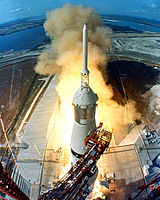
Launched by a Saturn V rocket from Kennedy Space Center in Merritt Island, Florida on July 16, Apollo 11 was the fifth manned mission of NASA's Apollo program. The Apollo spacecraft had three parts:
- Command Module with a cabin for the three astronauts which was the only part which landed back on Earth
- Service Module which supported the Command Module with propulsion, electrical power, oxygen and water
- Lunar Module for landing on the Moon.
After being sent to the Moon by the Saturn V's
upper stage, the astronauts separated the spacecraft from it and
travelled for three days until they entered into lunar orbit. Armstrong
and Aldrin then moved into the Lunar Module and landed in the Sea of Tranquility.
They stayed a total of about 21 and a half hours on the lunar surface.
After lifting off in the upper part of the Lunar Module and rejoining
Collins in the Command Module, they returned to Earth and landed in the Pacific Ocean on July 24.